Kumana National Park, Sri Lanka: Wildlife, Birds & Visitor Guide
Kumana National Park is one of Sri Lanka’s most important wildlife and birdwatching destinations. Located on the island’s south eastern coast, the park protects wetlands, lagoons, mangroves, dry-zone forest and coastal habitats that support hundreds of bird species as well as elephants, leopards, crocodiles and other wildlife.

Kumana National Park, Sri Lanka
Kumana National Park is a protected wildlife area on the south eastern coast of Sri Lanka and is particularly famous for its rich birdlife, wetlands and varied dry zone habitats.
Formerly associated with the name Yala East National Park, Kumana lies east of the better-known Yala National Park. The two protected areas are separated by the Kumbukkan Oya, a river that forms an important natural boundary in this part of Sri Lanka.
Although Kumana is best known as a birdwatching destination, it is much more than a bird sanctuary. The landscape contains lagoons, mangroves, grasslands, scrub, forests, rocky outcrops, river habitats and coastal vegetation, creating suitable conditions for a wide variety of wildlife.
For travellers staying around Arugam Bay or Panama, Kumana National Park is one of the most important wildlife attractions in Sri Lanka's Eastern Province.
Quick Facts About Kumana National Park
Location: South-eastern Sri Lanka
Province: Eastern Province
Protected area: Approximately 35,665 hectares
Former name: Yala East National Park
Managed by: Department of Wildlife Conservation, Sri Lanka
Best known for: Birdlife, wetlands and wildlife safaris
Major natural feature: Kumana Villu
Major river boundary: Kumbukkan Oya
Sri Lankan government publications state that Kumana National Park had expanded to approximately 35,665 hectares by July 2006.
Why Is Kumana National Park Famous?
Kumana National Park is especially famous for being one of Sri Lanka's major bird nesting, feeding and breeding areas.
Sri Lanka Tourism reports that approximately 255 bird species have been recorded in the Kumana area, including resident birds and migratory waterbirds.
The wetlands provide feeding, resting and breeding habitats for species of storks, herons, pelicans, cormorants, ibis, spoonbills, waders and many other waterbirds.
This combination of birdlife and natural wetland scenery has made Kumana an important destination for:
- Birdwatching
- Wildlife photography
- Nature safaris
- Wetland observation
- Wildlife research
- Nature tourism
Kumana Villu, The Heart of the Park
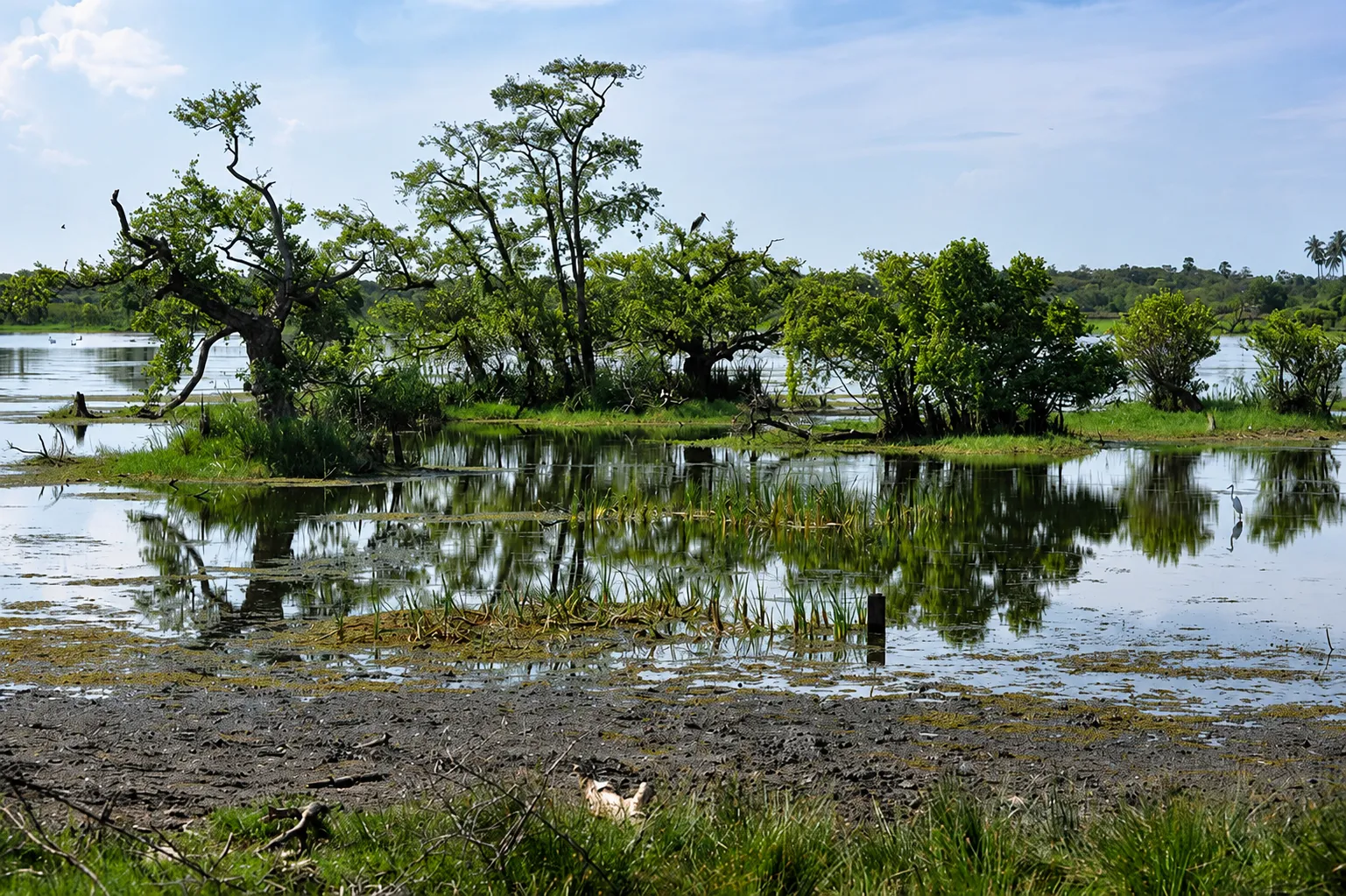
One of the most important ecological features of Kumana National Park is Kumana Villu.
A villu is a shallow wetland or natural floodplain basin. Kumana Villu is associated with the Kumbukkan Oya system and provides valuable habitat for aquatic birds and other wildlife.
Government information describes Kumana Villu as covering roughly 500 acres, while the park contains around 20 lagoons, tanks and associated wetland areas. Many of these water bodies are shallow, and some are periodically influenced by seawater.
These wetlands are one of the main reasons Kumana supports such a high diversity of birdlife.
Birds of Kumana National Park
Birdwatching is one of the main reasons travellers visit Kumana.
Among the birds officially documented from the Kumana landscape are species such as:
- Black-necked Stork
- Lesser Adjutant
- Painted Stork
- Grey Heron
- Purple Heron
- Spot-billed Pelican
- Little Cormorant
- Great Cormorant
- Caspian Tern
- Brahminy Kite
- Common Hoopoe
Sri Lanka Tourism also highlights species including the Eurasian Spoonbill and Great Thick-knee among the notable birds associated with Kumana.
Individual sightings naturally vary depending on rainfall, water levels, migration patterns, season and chance.
Migratory Birds in Kumana
Kumana plays an important role for migratory birds visiting Sri Lanka.
The Sri Lanka Tourism Development Authority's Arugam Bay tourism planning material states that large numbers of migratory birds use Kumana's lagoons and freshwater tanks during the migratory season, particularly from approximately mid-October to April.
Another important period for bird enthusiasts is the nesting season.
The Ceylon Bird Club identifies May and June as an important period when large numbers of birds nest around the mangrove wetland at Kumana.
Therefore, the ideal period depends on what a visitor wants to observe.
For migratory birds
The period from approximately October to April can be particularly rewarding.
For nesting and breeding activity
May and June are especially significant around the wetlands.
Wildlife conditions can change from year to year, so sightings should never be considered guaranteed.
Wildlife Beyond Birds
Kumana National Park is not limited to birdlife.
Scientific and government sources record several of Sri Lanka's best-known mammals within the park, including:
- Sri Lankan Elephant
- Sri Lankan Leopard
- Sloth Bear
- Deer
- Wild Boar
- Buffalo
Research conducted in Kumana has specifically documented elephants, sloth bears, leopards and several ungulates within the protected landscape.
The park is also associated with reptiles and wetland wildlife, including crocodiles.
The wider Kumana Wetland Cluster, recognized internationally under the Ramsar Convention, supports species including the Mugger Crocodile and several threatened wildlife species.
Seeing any particular wild animal on a safari depends on natural behaviour, weather, water availability, season and chance.
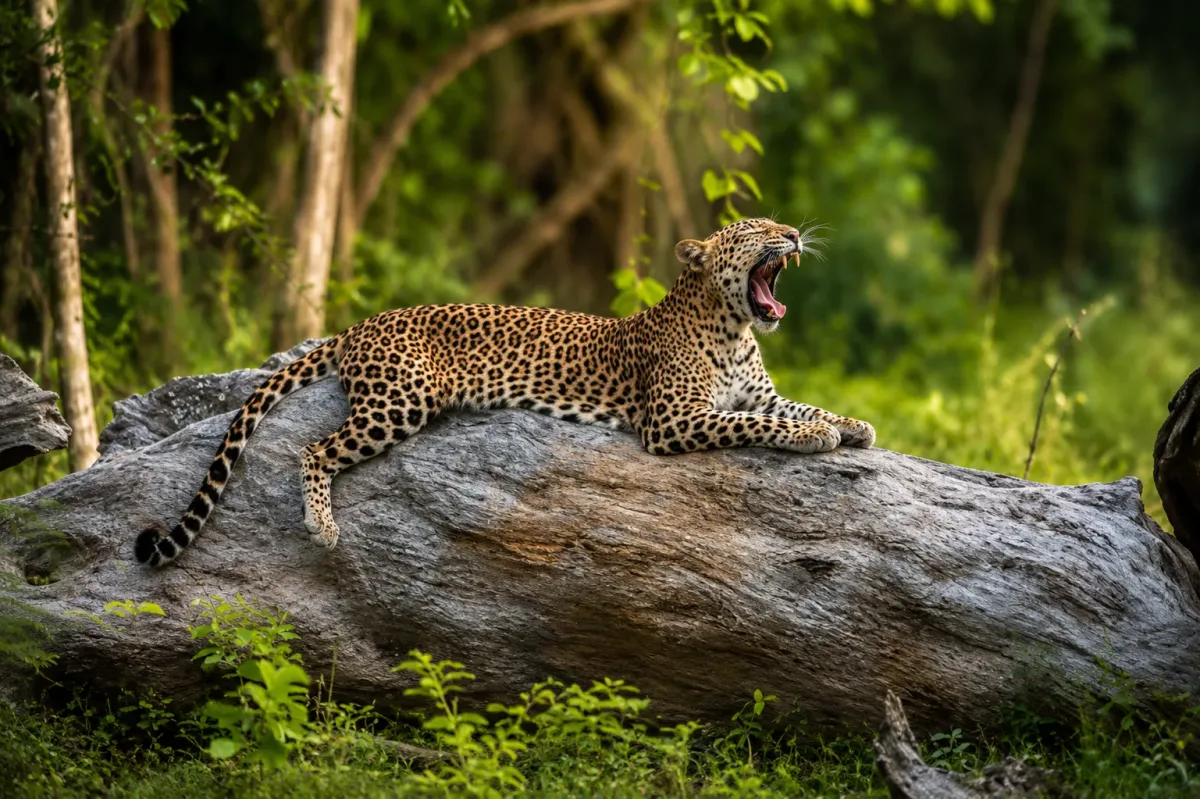
Are There Leopards in Kumana National Park?
Yes. Leopards are recorded in Kumana National Park.
Sri Lankan government publications specifically identify the Sri Lankan leopard, Panthera pardus kotiya, as occurring in Kumana.
However, visitors should understand an important point: a leopard sighting can never be guaranteed.
Leopards are wild animals that move freely through large territories. A responsible safari should focus on experiencing the entire ecosystem rather than chasing or disturbing an animal for a sighting.
Are There Elephants in Kumana?
Yes. Asian elephants occur within Kumana National Park.
Elephants use the forests, grasslands, wetlands and water sources within the wider Kumana landscape. Government and scientific sources confirm their presence within the park.
Depending on seasonal conditions, visitors may encounter solitary elephants or groups while travelling through the park.
As with all wildlife, sightings are unpredictable.
Habitats Inside Kumana National Park
One of Kumana's greatest strengths is the diversity of habitats contained within a relatively connected landscape.
Visitors may encounter:
Wetlands and Villus
Seasonally flooded areas support waterbirds, reptiles and many aquatic species.
Lagoons and Tanks
Kumana contains numerous lagoons and freshwater tanks that provide important feeding and resting areas for wildlife.
Mangroves
Mangrove vegetation around wetlands provides nesting and shelter for many birds.
Dry-Zone Forest
Large sections of the park contain forest typical of Sri Lanka's dry zone.
Grasslands and Scrub
Open areas provide feeding habitat for herbivores and opportunities for observing wildlife.
Coastal Habitats
Kumana extends toward Sri Lanka's south-eastern coastline and includes beaches, dunes, estuarine areas and coastal vegetation.
Government descriptions of the park specifically identify grasslands, coastal vegetation, rivers, forests, estuaries and thorn scrub within the Kumana landscape.
Kumana Wetland Cluster and Ramsar Importance
Kumana is also internationally significant for wetland conservation.
The Kumana Wetland Cluster was designated as a Ramsar Site in 2010.
The Ramsar Site covers approximately 19,011 hectares and lies within two existing protected areas:
Kumana National Park and the Panama-Kudumbigala Sanctuary.
The Ramsar-listed landscape contains a mixture of:
- Lagoons
- Estuaries
- Irrigation reservoirs
- Mangroves
- Salt marshes
- Sand dunes
- Scrubland
- Forest
Its international recognition reflects the ecological importance of the wetland complex for wildlife conservation.
Kumana and Yala National Park
Kumana and Yala form part of the broader protected landscape of south-eastern Sri Lanka, but they are separate national parks.
The Kumbukkan Oya separates Kumana from Yala National Park.
While Yala is internationally famous for large-mammal safaris, Kumana has a particularly strong reputation for birds, wetlands and a quieter dry-zone wilderness experience.
Visitors should therefore not think of Kumana simply as another entrance to Yala. It has its own habitats, conservation importance and wildlife character.
Visiting Kumana from Arugam Bay
Arugam Bay is one of the most convenient tourism bases for visitors planning to explore Kumana.
Many travellers combine their stay on Sri Lanka's east coast with a wildlife safari because the region offers both coastal experiences and access to protected areas.
A typical journey toward Kumana passes south through areas around Pottuvil, Panama and Okanda before reaching the national park. Actual travel time depends on accommodation location, road conditions and the safari arrangement.
How Do You Explore Kumana National Park?
Wildlife observation in Kumana is normally undertaken by safari vehicle.
The Department of Wildlife Conservation manages access to the protected area.
Official Sri Lanka Tourism information states that visitors obtain park permits and enter under the park's wildlife-management arrangements.
Visitors should check current regulations, entrance charges and operating arrangements before their safari because these can change.
Best Time of Day for a Kumana Safari
Early morning and later afternoon are generally useful periods for wildlife observation because temperatures are lower and many animals and birds may be more active.
However, wildlife movements remain unpredictable.
A longer safari provides more time to explore different habitats, while a shorter safari may suit travellers mainly interested in experiencing the park during one part of the day.
The best choice depends on the visitor's interests, available time and season.
Is Kumana National Park Worth Visiting?
For travellers interested in birds, wildlife, wetlands and less urbanized natural landscapes, Kumana National Park is one of the most significant protected areas in eastern Sri Lanka.
It is particularly suitable for:
- Birdwatchers
- Wildlife photographers
- Nature enthusiasts
- Families interested in wildlife
- Travellers staying around Arugam Bay
- Visitors interested in Sri Lanka's wetland ecosystems
Its importance comes not from a single animal but from the combination of wetlands, birdlife, forests, wildlife and coastal ecosystems protected within the same landscape.
Responsible Wildlife Watching in Kumana
Visitors can help protect Kumana by behaving responsibly inside and around the national park.
Good wildlife-safari practice includes:
- Never feeding wild animals.
- Avoiding loud noises around wildlife.
- Keeping a respectful distance from animals and nesting birds.
- Never throwing plastic, food or other waste inside the park.
- Remaining inside the safari vehicle unless specifically permitted by park authorities.
- Following instructions given by wildlife officers, trackers and authorized guides.
- Avoiding pressure on drivers to chase or surround animals.
- Never attempting to attract animals for photographs.
A wildlife sighting should never come at the expense of the animal's natural behaviour.
Frequently Asked Questions About Kumana National Park
What is Kumana National Park famous for?
Kumana National Park is best known for its birdlife and wetland habitats. Sri Lanka Tourism reports that around 255 bird species have been recorded in the area.
Where is Kumana National Park located?
Kumana is located in south-eastern Sri Lanka, in the Eastern Province, south of the Arugam Bay and Pottuvil area.
Is Kumana the same as Yala National Park?
No. Kumana and Yala are separate protected areas. Kumana was formerly known as Yala East National Park, and the Kumbukkan Oya separates it from Yala.
Are there leopards in Kumana?
Yes. The Sri Lankan leopard has been recorded within Kumana National Park, although sightings are never guaranteed.
Can you see elephants in Kumana?
Yes. Elephants occur within Kumana National Park and have been documented by government and scientific sources.
How many bird species are found in Kumana?
Sri Lanka Tourism states that approximately 255 bird species have been recorded in Kumana.
When is the best time for birdwatching in Kumana?
For migratory birds, approximately mid-October through April is significant, while May and June are particularly important for nesting activity around Kumana's wetlands.
What is Kumana Villu?
Kumana Villu is an important wetland associated with the Kumbukkan Oya system and is one of the key habitats supporting Kumana's famous waterbird populations.
Discover Kumana National Park
Kumana National Park protects one of Sri Lanka's most valuable combinations of wetlands, dry-zone forests, lagoons, mangroves and coastal habitats.
Its internationally significant wetlands and remarkable birdlife make it especially important for birdwatchers, while the presence of elephants, leopards, crocodiles and other wildlife creates a broader safari experience.
For travellers exploring Sri Lanka's east coast, a responsible safari in Kumana offers an opportunity to experience an ecosystem that is very different from the island's cities and beach resorts.